The Colonel: A Singular Life

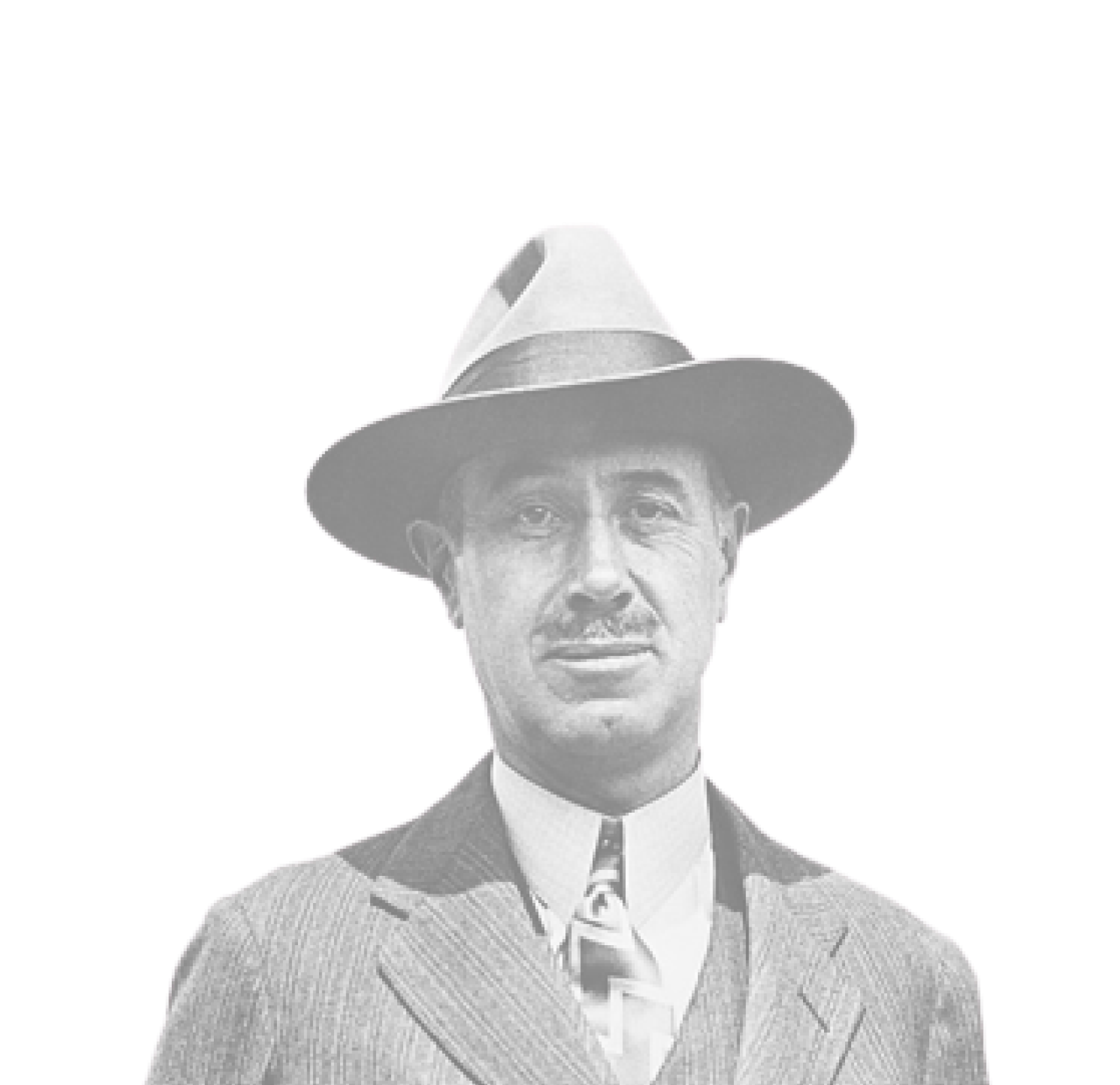
The measure of Robert Rutherford McCormick’s 74 years of life could encompass many lives.
Publisher, editor, media pioneer, and staunch defender of the First Amendment; war hero, explorer, and public servant; civic leader, attorney, and philanthropist. He stood 6-feet, 4-inches and was known as the Colonel, a rank achieved during his valorous military service and a nickname that proved to be an enduring reminder of his imposing presence.
Born July 30, 1880, in Chicago, “Bertie” as he was known in his early years, was the second son of Robert Sanderson McCormick and Katharine McCormick, whose father, Joseph Medill, was publisher of the Chicago Tribune.
At 9 years old, Robert moved with his family to London, where his father served as second secretary in the U.S. Embassy. In what was an early indicator of McCormick’s strong will and spirit of adventure, he taught himself to sail and attempted with a friend to cross the Mediterranean before a ship’s captain spotted them and returned the boys to land.
After returning to the U.S., Robert was sent to the prestigious Massachusetts prep school, Groton, where his headmaster described him as a lackluster student of above-average intelligence. Nevertheless, McCormick showed enough talent to be accepted at Yale, where he thrived and continued his adventurous pursuits, which included hunting with Inuit guides in Hudson Bay.
Back in Chicago in 1903 after graduating from Yale, McCormick started to forge his distinctive path, attending law school at Northwestern University and, at 23 years old, being elected a Chicago alderman on a platform of honest government. One year later, McCormick was elected president of the Chicago Sanitary District. The cynics of Chicago politics poked fun at his noble manner.
They soon understood he was not afraid to get his hands dirty or tangle with opponents. Announcing that merit — not patronage — would determine who gets employment at the district, McCormick fired hundreds of political hacks and replaced them with engineers.
While he might have become a very powerful elected official, McCormick’s life took a turn in 1906, when his older brother, Medill — who had been expected to take over leadership of the Tribune — suffered a nervous breakdown.
The paper’s future fell into further doubt with the death in 1910 of McCormick’s uncle Robert Patterson, editor in chief and president of the Tribune. A year later, McCormick became president of Tribune Company. One of his earliest acts was discouraging shareholders from selling the paper.
Over a five-year period in his 30s, while leading the Tribune, two fundamental components of McCormick’s personality — a love of adventure and the fierce desire to serve his country — emerged. During that time, he spent his honeymoon touring and writing about war-torn Europe with his bride Amy de Houle Irwin Adams.
Contrary to what some might expect from a man of his privilege, McCormick enlisted in the Illinois National Guard in 1915 and was dispatched to protect the southern U.S. border against raids from revolutionary Pancho Villa. Two years later, he joined the American Expeditionary Forces in World War I and served in a crucial early U.S. victory in a battle for a French village named Cantigny.
Promoted to colonel in the Illinois Guard in 1918, he received the U.S. Army’s Distinguished Service Medal in 1923 and remained in the military reserves until 1929. As an indication of how indelible his military service was for him, McCormick renamed his 500-acre estate in Wheaton after the French battleground where he served as commander. Cantigny opened as a public park in 1958.
Across the five decades of his leadership at the Tribune, until his death in 1955, McCormick frequently used the prominent platform — his biography called it a “joyously combative conservative broadsheet” — to express his strong beliefs, and as the anchor to what became a media empire that included the New York Daily News, Washington Times-Herald, WGN radio in 1924, and WGN TV in 1948. The call letters stand for “World’s Greatest Newspaper.”
Conservative, isolationist, and aggressive in many of his political beliefs, the Colonel was viewed as a supportive fatherly figure by his employees. His newspaper prospered and Tribune workers were among the highest paid in the industry.
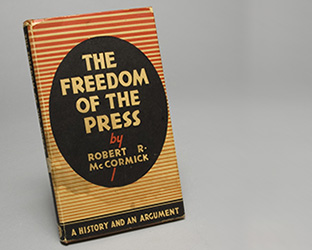
The Colonel also was an ardent defender of Freedom of the Press throughout his life, funding significant cases on the issue, authoring a book about the subject and providing crucial funding to establish and sustain Northwestern University’s acclaimed Medill School of Journalism.
In 1939, his wife Amy died. Five years later, the Colonel married Maryland Mathison Hooper, a close friend of Amy. On April 1, 1955, the Colonel died of natural causes a few months short of his 75th birthday. He was buried at Cantigny, dressed in his World War I uniform.
The Colonel’s last will and testament called for the establishment of the Robert R. McCormick Charitable Trust and stipulated that Cantigny become a public park. Although he outlined a few specific missions for his Charitable Trust — promoting education on freedom of speech was one — he also gave trustees broad discretion. As the will stated, “their [trustees] very long association with me has given them especial knowledge of the ideals and principles which have guided me in the management of the Tribune Company.”
Guided by his final wishes, the Foundation provides significant support for early childhood education, assists communities on the South and West Sides of Chicago, strengthens our democracy through support for journalism and civics education, helps veterans make a seamless transition to civilian life and through Cantigny, provides recreational and cultural amenities as well as military history to the public.
The McCormick Foundation also works to ensure that children and families, especially children, have the opportunity to thrive for generations to come.
A Legacy of Service
1880
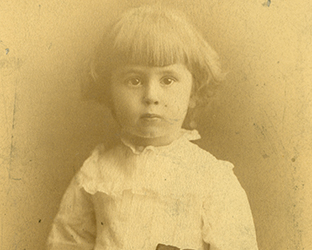
Robert Rutherford McCormick, second son of Robert Sanderson McCormick and Katharine McCormick, is born on July 30 in Chicago. He is known as “Bertie.”
1889
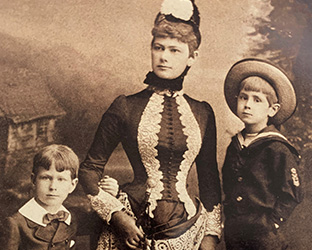
The McCormick family moves to London. While his father serves as second secretary at the U.S. Embassy there, Bertie attends Langley School then Ludgrove School in Hampshire.
1893
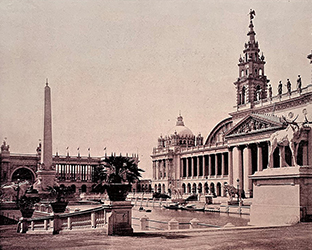
The McCormick family returns to Chicago. The steam engines, power turbines and other technology displayed at the World’s Columbian Exposition enthralls Robert.
1899
Joseph Medill, Robert’s grandfather, dies. Medill, a deeply influential figure in Robert’s life who was mayor of Chicago then editor and publisher of the Chicago Tribune. Robert is at his bedside.
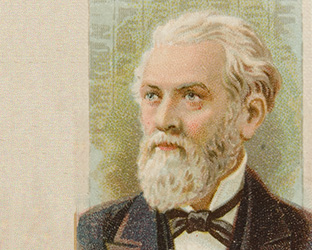
1905
After graduating from Yale, earning his law degree from Northwestern, and being elected a Chicago alderman, Robert is elected president of the Chicago Sanitary District.
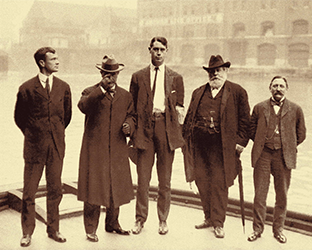
1911
After the death of his uncle a year earlier, Robert is elected president of the Chicago Tribune. He shares responsibilities with his cousin, Joseph Medill Patterson.
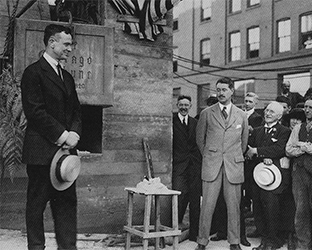
1915
Robert marries Amy de Houle Irwin Adams. The couple spends their honeymoon touring war-torn Europe. Robert visits several fronts in Russia, writing stories for the Tribune.
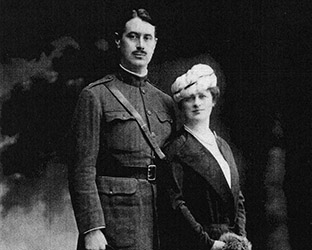
1918
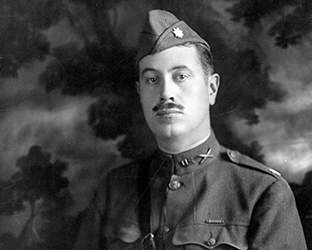
McCormick serves in the 5th Field Artillery of the 1st Division in the Battle of Cantigny, the first major American victory of World War I. Later he is promoted to colonel in the Illinois Guard.
1919
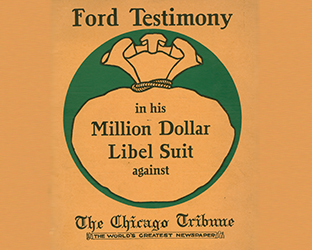
A jury determines that the Tribune libeled industrialist Henry Ford but, in a sign of respect for Colonel McCormick, penalizes him six cents for damages and six cents for court costs.
1921
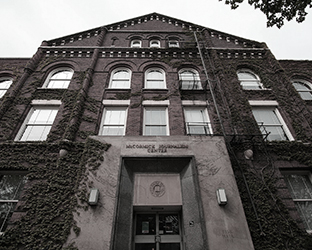
Funded by the Chicago Tribune and Colonel McCormick, Northwestern University establishes the Medill School of Journalism, named for the Colonel’s grandfather and Tribune editor, Joseph Medill.
1923
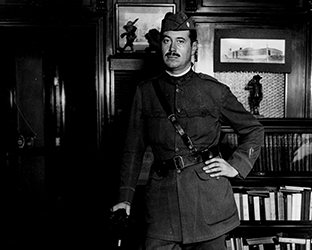
The Colonel receives the Distinguished Service Medal from the U.S. Army for “rare leadership and organizing ability, unusual executive ability, and sound technical judgment.”
1924
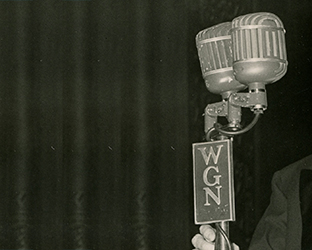
Colonel McCormick purchases fledgling radio station WDAP and gives it new call letters—WGN—for World’s Greatest Newspaper, the Chicago Tribune motto.
1939
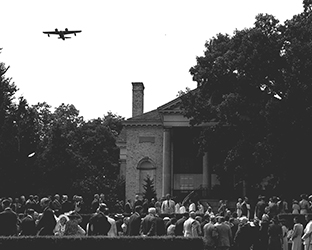
Amy McCormick dies. Mourners gather for her burial at Cantigny, the family estate in west suburban Wheaton. The Colonel orders a plane to fly over and drop rose petals.
1944
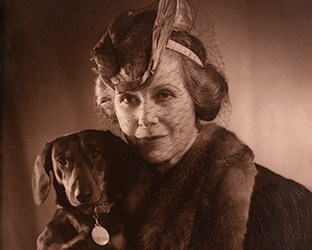
McCormick marries Maryland Mathison Hooper, a close friend of his first wife and 17 years his junior.
1948
Chicago’s second TV station, WGN, debuts with a broadcast of Golden Gloves amateur boxing, sponsored by the Tribune. The station would become famous as the home of the Chicago Cubs.
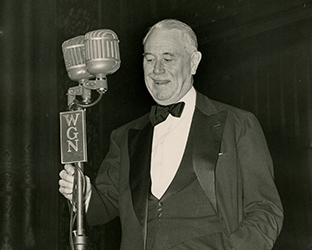
1955
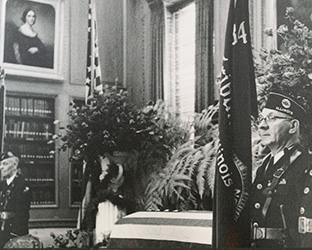
Colonel Robert R. McCormick dies at age 74 and is buried at Cantigny. His estate is estimated at $55 million and his will orders that 500-acre Cantigny be used as a public park and museum. The will also establishes the Robert R. McCormick Charitable Trust.
In His Own Words
On the First Division
On the First Division
But the First Division will never die in the memory of a gallant people. For them it will march forever. March on then, First Division! March over the sunny hills of France; march through the flaming towns of Picardy; up the shell-swept slopes of the Lorraine; through the gas-filled forests of the Argonne; on into everlasting glory.
Speech at the dedication of the Cantigny Monument, 8/9/1937
On The First Amendment
On The First Amendment
That [First] Amendment is a sharp and absolute injunction upon the power of government. No such absolute guarantee of human liberty is found anywhere else in political history, outside the borders of the United States. This point is so vitally important that every American must keep it in the forefront of his mind if he is to understand the true nature of our precious liberty.
Freedom of the Press-II, 10/20/1951
On Freedom of the Press
On Freedom of the Press
This power of the press is the greatest free protection the people have for their general welfare.
Freedom of the Press-VII, 12/29/1951
On the Power of a Free Press
On the Power of a Free Press
The newspaper is an institution developed by modern civilization to present the news of the day, to foster commerce and industry, to inform and lead public opinion, and to furnish that check upon government which no constitution has ever been able to provide.
Robert R. McCormick, Tribune Tower lobby
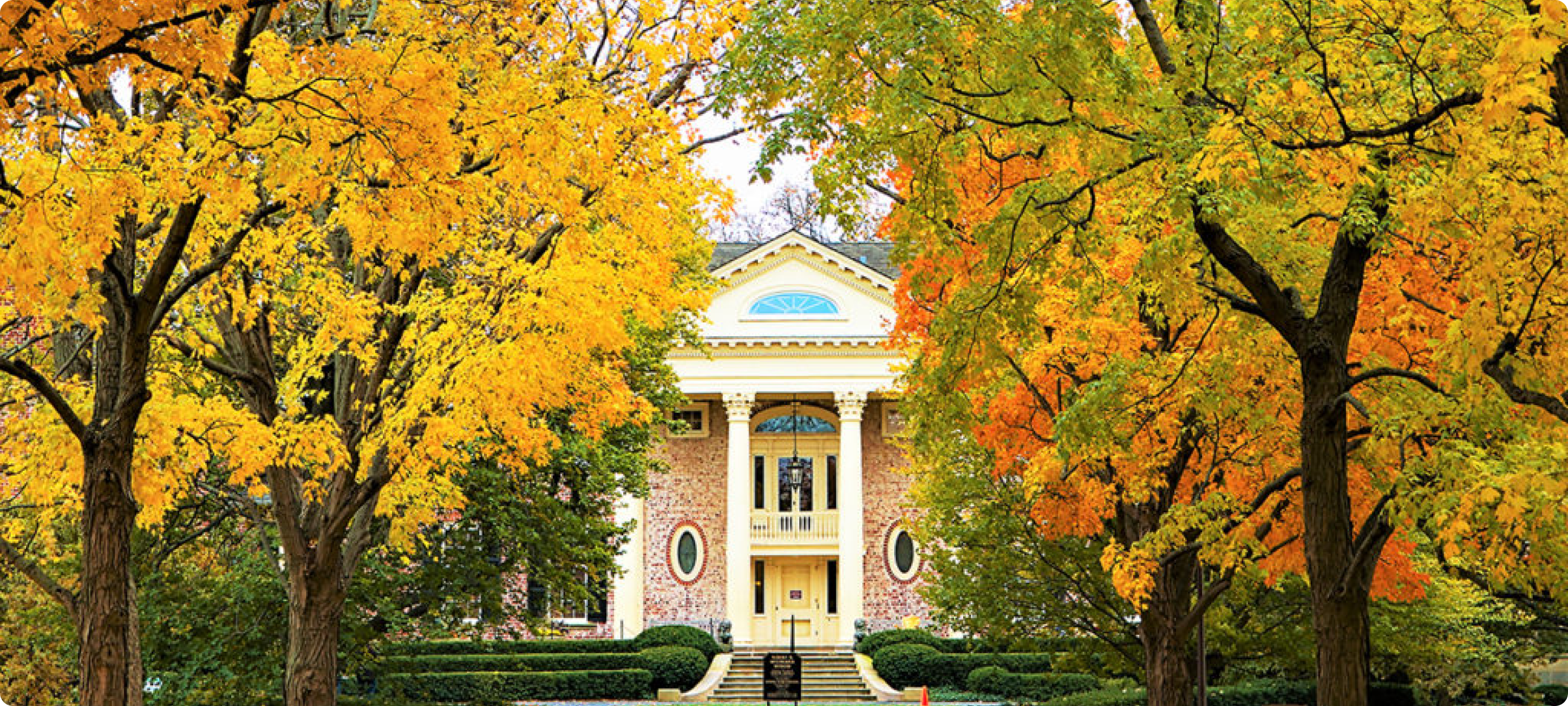
Visit The Colonel's former estate
McCormick was a citizen soldier and a friend of veterans. He served in the Illinois National Guard and, in 1917, at the age of 36 volunteered for duty in France during World War I. There he fought with the First Division at America’s first major battle of the war, the Battle of Cantigny. Later, he renamed his farm in Wheaton “Cantigny.” A reserve officer and a founding member of the American Legion, he often hosted his fellow veterans at Cantigny. McCormick was buried in his World War I uniform with military honors.
Today, Cantigny Park is a vibrant destination for recreation, learning and civic engagement that has enriched the lives of millions of visitors since opening to the public in 1958.